What is discretionary spending?
Spending you choose to make but don't want a budget line for, like eating out or clothes. Bunse tracks it in Insights.
Updated 1 October 2026
Discretionary spending is money you choose to spend but don't want to plan a budget line for: a meal out, new trainers, a weekend away. Tagging it keeps it out of your budget's planned lines, while Insights still shows where it goes.
Tag a payment as discretionary
When you assign a payment, choose a type under Discretionary spend — tracked, not budgeted:
- Eating & Drinking Out
- Hotels & Travel
- Days Out & Entertainment
- Hobbies & Crafts
- Clothing & Footwear
- Personal Care & Grooming
- Electronics & Gadgets
- Home & Garden
- Fitness & Wellness
- Digital Purchases
- Other
See it in Insights
Open Insights › Discretionary. Totals shows each type's share of your discretionary spending over the months you've chosen. Once you have three months of transactions, Trend compares each type's last complete month with its usual.
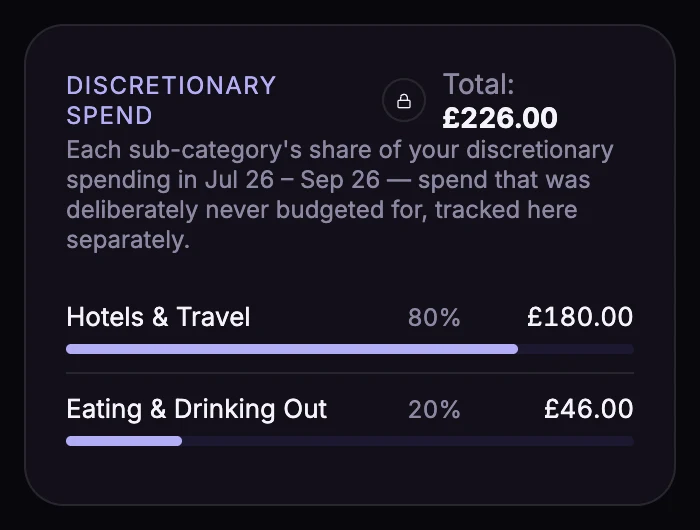
Discretionary spending is still spending. It's kept out of your budget's planned lines, but it's included in total spend on the Insights Overview.
When it's regular enough to budget for
If a type turns out to be steady, Bunse suggests turning it into a budget line. A type qualifies when it's had similar amounts in each of the last three months, or appeared in at least three of the last six or twelve. You'll see it on the Budget tab's Planned view, under Discretionary spend, ready to budget for, with its monthly average.
Tap Track this to create a budget line for it. Payments already tagged with that type move into the new line, so its history starts straight away.